
Hidden Apps, Real Danger: The Teen Online Safety Crisis Every Parent Must Know
Privacy note: Names and location have been changed, but all dates and legal outcomes are drawn from public court records.
On a breezy November afternoon in 2018, 18-year-old Jordan Ellis bounded out of Riverdale High in Summit City, answering a flurry of affectionate DMs from a classmate he thought cared about him. Minutes later he lay bleeding on the sidewalk—gunned down by two teens he had never met. Investigators would later reveal that 17-year-old Kayla Morton had spent weeks cultivating a fake romance to lure him outside, where rival-gang gunmen ambushed him, firing even after he fell. Today, Morton is serving 23 years, the plot's architect Marcus Johnson is serving life, getaway driver Devon Turner is serving 50 years, and a second shooter remains at large. The storm that swallowed Jordan's future began with nothing more than a follow-back and a few flattering emojis—proof of how quickly Teen Online Safety can turn into a life-or-death matter.
From a probation-officer's perch, I've watched teens step into danger for two recurring reasons: the urge to impress their peers and a head-over-heels infatuation with the "street" lifestyle they see online. Social media lets a kid slip on any persona—gang affiliate, big-money hustler, fearless fighter—without facing real-world repercussions … until the day that digital swagger attracts people who actually live that life and are looking to level up. Jordan isn't to blame for his own death, but I've seen this story told too many times. Especially when online beef collide with real-world violence.

The Drizzle Before the Storm
Jordan's parents didn't miss a single football game, but they did miss the little flickers of risk that showed up long before the gunmen. It started with the midnight-blue glow leaking under his bedroom door—first sign that real sleep had lost the battle to late-night screens. Then came the sudden phone-flip any time someone walked past, the new "calculator" icon that wasn't there last week, and the way he laughed at inside jokes no one at home understood. Offline, Jordan's playlist shifted from motivational hype to tracks glorifying "ops" and get-backs; his selfies grew harder, chin tilted just so, hand signs half-formed. He stopped dropping location tags with longtime teammates and started posting cryptic captions about loyalty and "earning stripes." Each of these alone can look like normal teenage turbulence, but stacked together they sketch the storm track: secrecy, altered friend-loops, coded language, overnight mood swings. Spotting that pattern early—and naming it out loud—gives a parent the only leverage that matters in Teen Online Safety: time to ask the right questions before someone else answers them with violence.
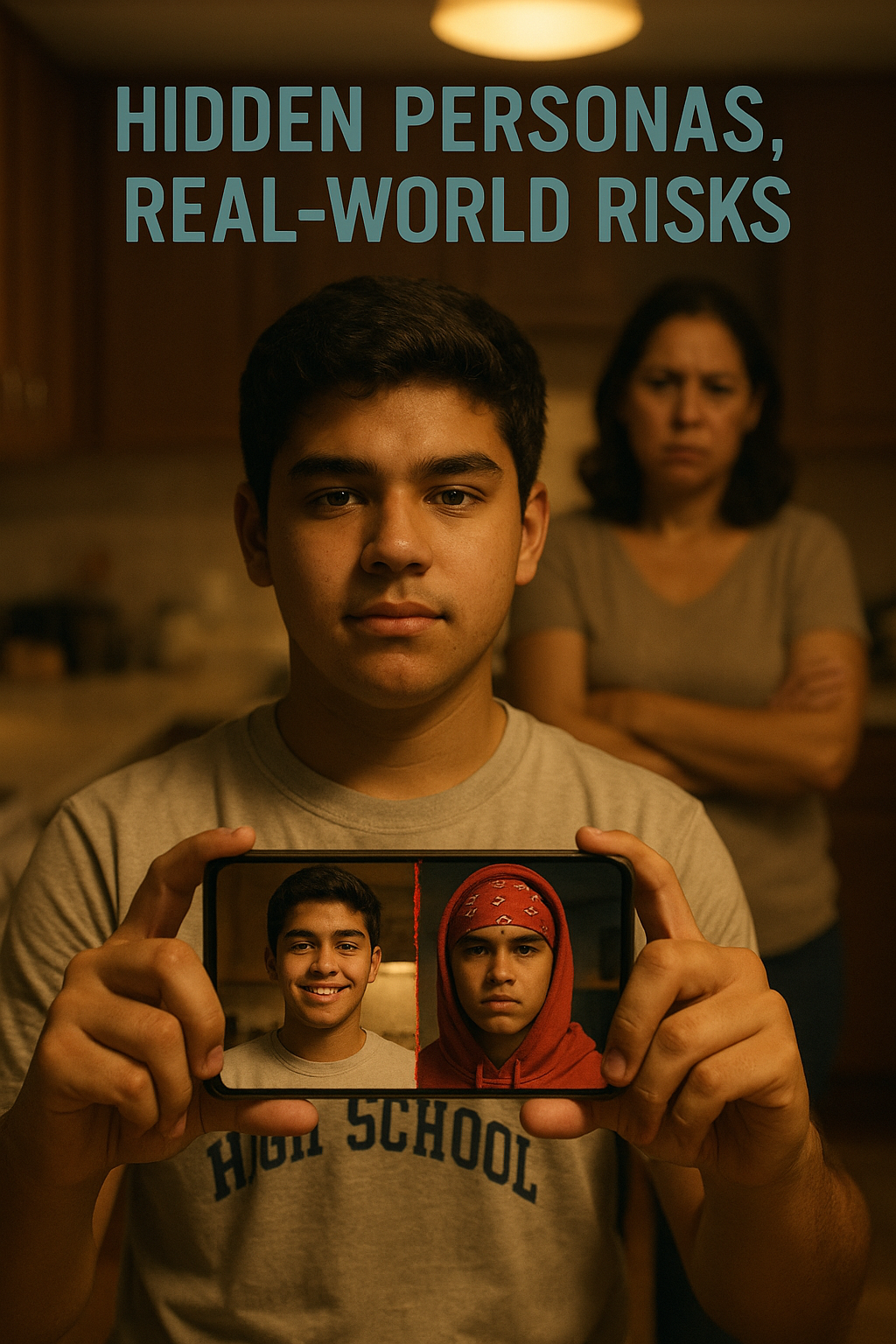
Spot the Sneak Apps: Your 60-Second Phone Audit
Before a single word leaves your mouth, give yourself one discreet minute with your teen's phone (or sit beside them and ask to see these screens together). You're not hunting every text—just the red flags that shout double life in progress.
- Mimic-Calculator icons – Keepsafe, Hide It Pro, Vaulty, Calculator +, and Secret Photo Vault all masquerade as harmless math apps. Tap the icon once; if it demands a PIN before any numbers appear, you've found a vault.
- Ghost folders in the photo gallery – On iPhone, scroll to the bottom of Albums for "Hidden"; on Android, look for "Secure Folder" or third-party album names like ".private."
- Duplicate social apps – Two Instagrams, two Snaps, or a stealth Discord clone (often named "Overlay" or "Updater") signal one profile for parents, one for everyone else.
- VPN or "Network Boost" apps – Betternet, Turbo VPN, 1.1.1.1, or anything labeled "private proxy" can punch a hole through your home filters.
- Settings → Screen Time / Digital Well-being spikes – Sudden midnight usage surges or a seven-hour TikTok day reveal more than any caption ever will.
Finding a vault or shadow account isn't the finish line—it's the starting gun. How you bring it up will decide whether your teen shuts every door or cracks one open.
Talk, Don't Accuse: A Curiosity-First Script
You find a vault-style "calculator" app. Pause, breathe, and open a conversation—not a cross-examination.
Parent: "I noticed this calculator-looking app on your phone. I have never used one like it—could you show me how it works?"
Teen: [demonstrates or hesitates]
Parent: "Thank you. I have heard some parents say these apps can hide photos. Have you come across that?"
Teen: [explains, confirms, or deflects]
Parent: "I am not asking to read your messages. My goal is to keep you safe and to be honest with each other. What feels fair if either of us discovers an app is hiding something risky?"
Why this works:
- Leading with curiosity keeps the door open; your teen becomes a guide rather than a suspect.
- Collaborative fact-finding ("Have you come across that?") invites them to share what they know.
- Shared rule-setting builds the trust that sustains long-term Digital Well-being.
Before You Close the Tab: Five Steps to Keep the Cloud Away
Disclaimer
The information in this post is provided for educational and general‐information purposes only and does not constitute legal advice, clinical counseling, or a substitute for professional intervention. Although the content draws on Ron's 12 years of juvenile-probation experience, every family situation is unique, outcomes may vary. Always consult a qualified attorney, licensed mental-health professional, or other appropriate specialist before acting on any guidance offered here. If you or your child may be in crisis, contact a licensed mental health professional or call emergency services (911 or your local emergency number) immediately. YouthPivot and its contributors disclaim all liability for actions taken or not taken based on this material.
Enjoyed this article? If it helped you or your family, consider a small contribution so I can keep creating practical tools.
☕ Buy Me a Coffee